
You can edit and export a video on a Windows PC for free with no watermark, but only some editors let you do it, and only if you stay inside their free limits. Shotcut, OpenShot, VSDC Free and DaVinci Resolve’s free version give you a clean file. Clipchamp and CapCut also do, as long as your project uses nothing from their paid libraries.
The catch is in the details. Clipchamp doesn’t add a watermark at all, but it blocks the export if you’ve used a premium item. CapCut checks your project for paid items when you click Export. DaVinci Resolve adds its logo if you use one of its paid-only effects. On a low-end laptop, the question of which editor will even open matters as much as the watermark. There is also one check that tells you what you’ll get before you’ve put hours into a project.
Why Free Video Editors Hide the Watermark Until Export
Most freemium editors let you use paid features while you edit and only charge you when you export. CapCut says this plainly: its help centre explains that free users can preview many advanced features, but exporting videos that use them requires an active Pro subscription. It also says that when you click Export, “the system scans your project” for Pro-only items. So nothing stops you while you edit. The check happens at the last step.
This design explains why the surprise costs so much. By the time the check runs, the edit is finished, and removing a paid effect can mean redoing part of the timeline. Clipchamp handles the same situation differently. Microsoft says that if you use premium stock media or a feature your plan doesn’t include, no watermark is added, but you won’t be able to export until you upgrade. Microsoft adds that Clipchamp shows small visual hints on paid features while you edit. That’s a real warning, but it’s easy to miss if you don’t know to look for it.
Other editors are simpler and just brand every free export. Filmora’s own download page says the free version gives you all the editing features, but exported videos will have a Filmora watermark until you buy a plan. The frustration this causes shows up in one Reddit request for a free editor. The poster said every free option they found, “like Filmora,” was “full of bloat and has a giant watermark,” and asked for something “bare bones … like audacity for videos.”
How We Tested: The Same 60-Second Project on One Windows PC
The method is simple enough to repeat on your own PC. Build the same 60-second project in each editor, using only your own clips, one text title, one transition and one music track. Then export it at the highest setting the free tier offers. For each editor, note three things: which export options were available or greyed out, whether a warning or upgrade prompt appeared, and whether any branding showed up in the finished file. Check the file’s first frame, last frame and a frame in the middle, because some branding only shows up in an ending clip.
The findings below come from each developer’s own current documentation, read on 29/09/2026, plus the community threads linked in each section. Treat every “no watermark” claim as the vendor’s own statement about its product, which it can change with any update. Your own export is the only proof that counts. That’s why the same short test appears again in the section on checking an editor before you start.
Free Editors That Export Without a Watermark
If you’re on Windows 11, check what you already have before downloading anything. Microsoft says Clipchamp is built into Windows 11 and exports for free at up to 1080p when you use your own media and its free stock collection. Microsoft 365 Personal and Family subscribers also get the premium features, including 4K export.
Among installable editors, the two open-source options state their terms most clearly. OpenShot’s documentation lists “no time limits, no size limits, and no watermarks on your finished videos” and allows commercial use. Shotcut’s FAQ says it is free for commercial use under the GPLv3 licence and doesn’t need the internet to check a subscription. None of the Shotcut pages checked describe a paid tier, and in one CapCut alternatives thread a user recommended it simply as “free and open source.”
VSDC and MiniTool MovieMaker both make strong claims with conditions attached. VideoSoftDev says VSDC Free exports are free of watermarks, branding or time limits for personal and educational use, but you need VSDC Pro for commercial work. MiniTool says MovieMaker exports videos up to 4K without watermark, for free. That’s the company’s own marketing, and the page doesn’t mention any caps on video length or number of exports.
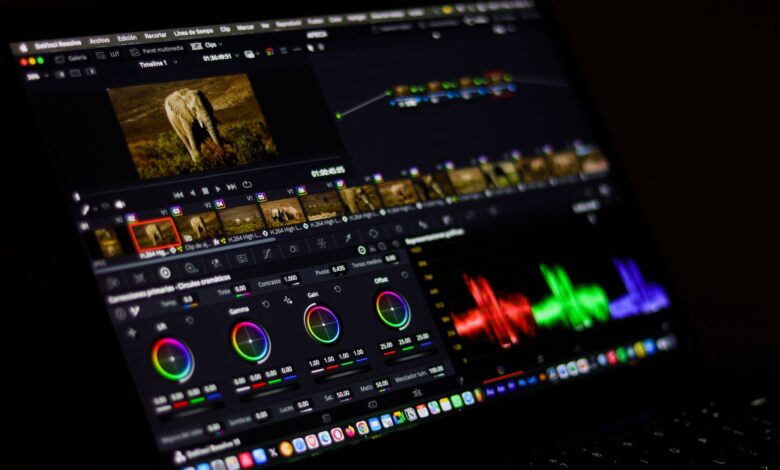
DaVinci Resolve offers the most capability. Blackmagic Design says the free version handles 8-bit video at up to 60fps in resolutions as high as Ultra HD 3840 × 2160. The official page doesn’t talk about watermarks, but DaVinci Resolve users on Reddit say the free version only adds a watermark when you use Studio-only features. The CapCut and DaVinci trap section below covers this.
| Editor | Free export ceiling (vendor-stated) | Watermark on the free tier | What can still stop a clean export | Commercial use on free tier |
|---|---|---|---|---|
| Clipchamp (personal) | 1080p | None, per Microsoft | Premium stock or features block export entirely | Not addressed on the pages checked |
| OpenShot | Presets up to 16K listed | None, per OpenShot | Nothing stated | Yes, per OpenShot |
| Shotcut | Not capped in the docs checked | No paid tier described | Nothing stated | Yes, under GPLv3 |
| VSDC Free | 4K and 8K formats supported | None, per VideoSoftDev | Not for commercial work | No, Pro required |
| MiniTool MovieMaker | Up to 4K | None, per MiniTool | Nothing stated on the home page | Not addressed on the pages checked |
| DaVinci Resolve (free) | Ultra HD at 60fps | None on standard exports | Studio-only effects add a watermark | Not addressed on the pages checked |
| CapCut Desktop (free) | Pro locks 4K/60fps | None if you use only free assets | Any Pro-tagged item triggers the paywall | Not addressed on the pages checked |
Free Editors That Add a Watermark (and What Removal Costs)
Filmora is the clearest example of a free editor that brands every export. Its FAQ says you can download and use it for free with every editing feature, but “the only limitation is that exported videos will have a Filmora watermark”, and removing it means buying a subscription. It works as a full trial rather than a free editor, which makes it fine for learning but not for a finished video.
Removal costs weren’t verified in naira for any of these editors, so check the price on the checkout screen shown to your own account. CapCut says Pro pricing varies by region, device and available promotions, and it tells you to check the Upgrade or subscription button in the web, desktop or mobile app to see your local price. The one fixed price found was Blackmagic’s DaVinci Resolve Studio at US$295, paid once rather than monthly. For Clipchamp, Microsoft says premium features come with Microsoft 365 Personal and Family plans. If you already pay for Microsoft 365, you may have the upgrade without knowing it.
CapCut’s Pro Template Trap: Watermarks You Don’t See Until Export
CapCut is conditionally free, and its help centre spells out the conditions. On desktop, the export screen greys out or locks “4K,” “60fps” or “No Watermark” if you aren’t a Pro user and your project uses a Pro-tagged item. If you try to export anyway, you get a message saying CapCut Pro is required. The Pro items include templates, effects, fonts, music tracks and stickers with a Pro badge, AI tools, and premium transitions or colour filters (called LUTs). CapCut also warns that choosing 1080p doesn’t help: “watermark removal on videos using Pro materials always requires Pro, regardless of resolution.”
Templates are the easiest way to fall into this. A separate CapCut help page says templates often include a small CapCut watermark at the end of the video. It recommends editing manually instead, and scrolling to the end of the timeline to delete any automatic ending clip that carries the logo. In one r/CapCut thread about sudden watermarks, a user said the watermark “seems to only show up when I use a template.” Another suspected that a new text style they had just tried caused it.
DaVinci Resolve has a similar trap, with one difference that helps you. Blackmagic lists features that are only in Studio, including magic mask, AI spatial noise reduction, film grain and optical blur. In one r/davinciresolve beginner thread, a user got a Studio watermark after applying Speed Warp slow motion, and other commenters identified it as a Studio-only feature. The difference is that one DaVinci Resolve user in the earlier watermark thread noted the watermark is “instantly visible in timeline, not hidden until you reach export.” You can see it while you edit, so you can catch it early.
Will These Editors Run on Your Low-End PC?
A clean export is no use if the editor struggles to play back your timeline, and the minimum specs vary widely. DaVinci Resolve 21 asks the most. Blackmagic’s release notes list, for Windows, 16 GB of system memory (32 GB with Fusion) and a GPU with at least 4 GB of VRAM. VRAM is the graphics card’s own memory. On a typical 4 GB or 8 GB budget laptop, DaVinci Resolve falls below Blackmagic’s stated minimum.
VSDC asks the least. VideoSoftDev lists 2 GB of RAM and a 1.5 GHz processor as the minimum, with 8 GB recommended for HD media and 16 GB for 4K. It still supports Windows 7 and 8, and you need administrator permission to install it. Shotcut sets its requirements by footage type: at least 4 GB of RAM for SD, 8 GB for HD and 16 GB for 4K, with four processor cores recommended for HD. OpenShot’s minimum is 4 GB of RAM with 16 GB recommended, on a 64-bit system with at least two cores.
CapCut’s own download guide gives a minimum of 4 GB of RAM, an Intel Core i3, and 10 GB of free storage on 64-bit Windows 10 or later. MiniTool MovieMaker lists 8 GB of RAM, an Intel i5 and 10 GB of free disk space. No RAM figure for Clipchamp was found. Microsoft only says the personal version runs in Edge or Chrome and is built into Windows 11.
| Editor | Minimum RAM (vendor-stated) | Other notable requirement |
|---|---|---|
| VSDC Free | 2 GB (8 GB for HD) | 500 MB for installation |
| Shotcut | 4 GB for SD, 8 GB for HD | 4 cores for HD |
| OpenShot | 4 GB (16 GB recommended) | 64-bit, at least 2 cores |
| CapCut Desktop | 4 GB | 10 GB free storage |
| MiniTool MovieMaker | 8 GB | Intel i5, 10 GB free disk |
| DaVinci Resolve 21 | 16 GB | GPU with at least 4 GB VRAM |
| Clipchamp | Not published on pages checked | Edge or Chrome, or built into Windows 11 |
If your laptop is near the bottom of these ranges, Shotcut’s FAQ recommends turning on Preview Scaling and Proxy editing to reduce preview lag. Proxy editing means the editor works with lighter copies of your clips while you edit, then uses the full-quality files for the final export.
How to Verify an Editor Before You Start Editing
No check guarantees what a free tier will do next month, because vendors change their terms. These steps just lower the chance of a surprise at the end.
- Search the editor’s own help centre for “watermark” and “export.” CapCut and Microsoft both publish pages saying exactly what triggers a paywall. Those pages beat any roundup, because they come from the company that sets the rules.
- Learn what the paid badge looks like. CapCut marks Pro items with a badge, and Clipchamp shows visual hints on premium features. Before you commit to a template, font or music track, check whether it carries that mark.
- Check the free export ceiling against what you need. If you need 4K, Clipchamp’s free tier stops at 1080p and CapCut locks 4K behind Pro, so both are ruled out before you begin.
- Run a 10-second dry run. Build a tiny project using the same kinds of assets and effects you plan to use, export it at your target setting, and watch the whole file, including the last second. This is the only step that tests the real product instead of what the vendor says about it.
- Look for recent reports from real users. Search the editor’s name plus “watermark” on Reddit. Treat what you find as individual reports, not proof of how the app behaves for everyone.
The same idea applies to design tools: free plans often hold back the full export until the last step. GistNaira’s companion guide on what Canva’s free plan and its alternatives let you export covers that side.
What to Do When a Watermark Appears After You’ve Finished Editing
Start with the fixes the vendors document, because they don’t put your project at risk. In CapCut, first scroll to the end of the timeline and delete any automatic ending clip that carries the CapCut logo. Then look for items with the Pro badge and replace premium stickers, transitions or filters with free alternatives, and export again. In Clipchamp, look for the visual hints on premium items and remove or swap them, since Microsoft says the export is blocked, not watermarked. In DaVinci Resolve, remove the Studio-only effect. In one Speed Warp case, commenters suggested switching to a different motion estimation method.
If CapCut adds a watermark even though you used no Pro items, users in the r/CapCut watermark thread describe three workarounds. These are individual reports that don’t always work, and two of them can cost you data, so read the warnings first. One user said the “off” watermark setting sometimes misbehaves, and that switching to another option and back to “off” fixed it. Several said uninstalling and reinstalling cleared the watermark. However, another user warned that the uninstaller may have a “keep user data” box, and unticking it will likely delete your projects. Others rolled back to an older version. One commenter said a project they had opened in the newer version became inaccessible after rolling back, and another said an older version later started forcing the watermark too.
If none of this works, the reliable fix is to switch editors. Export your raw clips, rebuild the edit in an editor whose free export is clean (Shotcut or OpenShot, for example), and run the dry run from the previous section before you spend time on the full edit.
The Bottom Line
For a clean export on Windows without paying, Shotcut, OpenShot and VSDC Free (for non-commercial work) have the simplest terms. Clipchamp is the easiest place to start on Windows 11 if 1080p is enough for you. DaVinci Resolve offers the most power, but only on a PC with 16 GB of RAM, while CapCut stays clean only if you avoid every Pro-badged item. Whichever you choose, export a 10-second test and watch it to the last frame before you start the real project.
Frequently Asked Questions
Can I use VSDC Free for paid client work or a business channel?
Not under its free licence. VideoSoftDev says VSDC Free is for personal and educational use, and commercial use requires a one-time purchase of VSDC Pro. OpenShot and Shotcut both say commercial use is allowed on their free versions.
Will Shotcut work on a laptop with only 4 GB of RAM?
Shotcut’s FAQ lists 4 GB as enough for SD footage, but 8 GB for HD. With 4 GB, it’s best to turn on Preview Scaling and Proxy editing. Expect the preview to struggle with HD phone clips.
Does Clipchamp ever put a watermark on my video?
Microsoft says Clipchamp never adds a visual, audio or other watermark, on either personal or work accounts. If your project uses something your plan doesn’t include, the export is blocked rather than branded, so remove the premium item and export again.
